
BlogOptimisation
OptimisationLast-Mile Delivery: Challenges and Solutions
Last-mile delivery is the most complex and costly stage of the delivery process. Learn about the biggest challenges businesses face from rising delivery costs to failed deliveries and discover how smart delivery management solutions like Dropioo improve efficiency, reduce costs, and enhance customer satisfaction.
Sur cette page
Last-Mile Delivery: Challenges and Solutions
Last-mile delivery is the final step in the logistics process, where goods are transported from a distribution center or warehouse to the customer's doorstep. Although it is the shortest segment of the supply chain, it is often the most expensive, complex, and critical.
With the rapid growth of e-commerce and rising customer expectations, businesses must deliver orders faster, more accurately, and at lower costs than ever before. Companies that fail to optimize their last-mile operations risk higher expenses, dissatisfied customers, and lost business opportunities.
Fortunately, modern delivery management platforms like Dropioo help businesses overcome these challenges through intelligent route planning, real-time tracking, and automated delivery operations.
1. Rising Customer Expectations
Today's customers expect:
Same-day or next-day delivery
Accurate delivery time estimates
Real-time order tracking
Reliable communication
Fast issue resolution
Meeting these expectations without the right technology is becoming increasingly difficult. Businesses that cannot provide a seamless delivery experience often lose customers to competitors.
Using delivery management software allows companies to improve visibility and provide customers with accurate delivery updates throughout the delivery journey.
2. Increasing Delivery Costs
Last-mile delivery represents one of the largest operational expenses in logistics.
Common cost drivers include:
Fuel consumption
Driver wages
Vehicle maintenance
Traffic congestion
Failed delivery attempts
Administrative overhead
Without efficient planning, businesses spend more money completing fewer deliveries.
Route optimization helps reduce unnecessary mileage and improves vehicle utilization, lowering operational costs while increasing productivity.
3. Traffic Congestion and Urban Deliveries
Deliveries in busy cities present unique challenges.
Drivers frequently encounter:
Heavy traffic
Road closures
Construction zones
Parking limitations
Restricted delivery hours
These obstacles increase delivery times and fuel consumption.
Smart route planning systems automatically calculate the most efficient routes based on traffic conditions and delivery priorities, helping drivers avoid unnecessary delays.
4. Failed Deliveries
A failed delivery is expensive.
When customers are unavailable or delivery information is incorrect, businesses often need to schedule another trip, increasing fuel, labor, and operational costs.
Common causes include:
Incorrect delivery addresses
Customer absence
Poor communication
Delivery scheduling conflicts
Providing customers with delivery notifications and estimated arrival times helps reduce failed delivery attempts and improves customer satisfaction.
5. Managing Large Delivery Volumes
As businesses grow, managing deliveries manually becomes increasingly difficult.
Companies often struggle with:
Assigning deliveries to drivers
Balancing workloads
Monitoring daily operations
Coordinating multiple vehicles
Responding to unexpected changes
Automation simplifies these tasks by assigning deliveries intelligently and optimizing routes based on business rules and operational constraints.
6. Limited Operational Visibility
Without real-time visibility, managers often struggle to answer important questions:
Where are my drivers?
Which deliveries have been completed?
Which orders are delayed?
How efficient are today's routes?
Modern delivery management systems provide real-time dashboards that allow managers to monitor deliveries, track driver progress, and quickly respond to operational issues.
How Dropioo Solves Last-Mile Delivery Challenges
Dropioo helps businesses streamline last-mile delivery by combining intelligent route optimization, real-time tracking, and automated delivery management in a single platform.
With Dropioo, businesses can:
Automatically optimize delivery routes
Assign deliveries to the right drivers
Monitor drivers in real time
Reduce fuel consumption
Improve delivery accuracy
Minimize failed deliveries
Increase fleet productivity
Scale delivery operations efficiently
By replacing manual planning with intelligent automation, Dropioo helps businesses improve efficiency while delivering an exceptional customer experience.
Conclusion
Last-mile delivery is one of the most important aspects of modern logistics. Although it presents significant operational challenges, businesses can overcome them through better planning, automation, and data-driven decision-making.
Investing in smarter delivery management allows companies to reduce costs, improve customer satisfaction, and build scalable logistics operations for future growth.
With Dropioo, businesses gain the tools they need to optimize every delivery, improve fleet performance, and turn last-mile logistics into a competitive advantage.
Prêt à optimiser vos tournées ?
Démarrez votre essai gratuit aujourd'hui - 30 jours gratuits, sans carte bancaire.
Essai gratuitContinuez la lecture
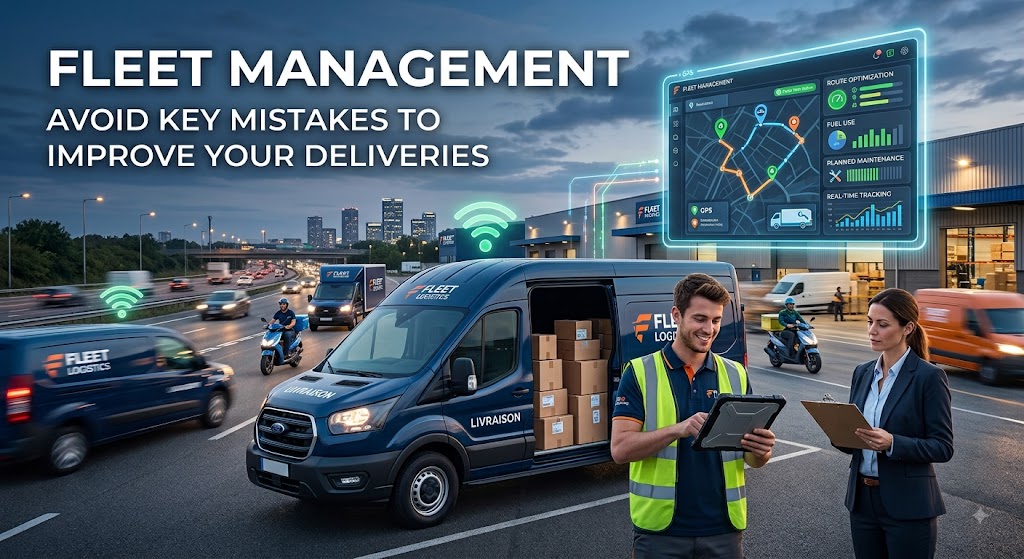
Fleet Management: Common Mistakes to Avoid for Better Deliveries
Discover the most common fleet management mistakes and learn how to reduce operating costs, optimize routes, improve driver performance, and make deliveries more efficient.
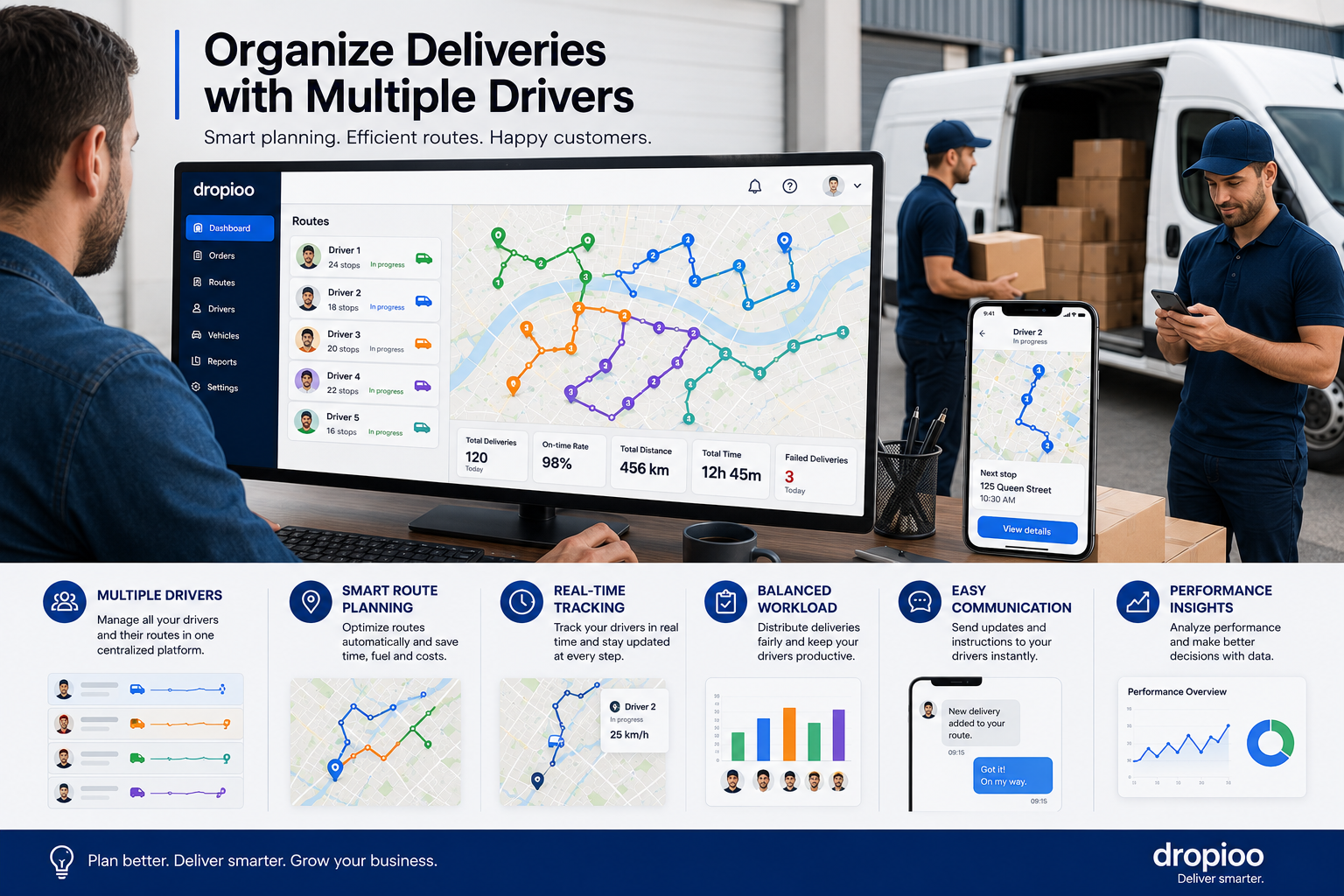
How to Organize Deliveries with Multiple Drivers
Managing multiple drivers can quickly become challenging as the number of deliveries increases. Learn how to efficiently assign orders, balance workloads, optimize routes, manage driver availability, and improve overall delivery performance.