
BlogOptimización
OptimizaciónEverything You Need to Know About Delivery and Shipping
Learn everything you need to know about delivery and shipping, from order processing and route planning to last-mile delivery and real-time tracking. Discover how Dropioo helps businesses optimize logistics, reduce costs, and improve delivery performance.
En esta página
Everything You Need to Know About Delivery and Shipping
Delivery and shipping are the backbone of modern commerce. Whether you're running an e-commerce store, a retail business, a wholesale operation, or a logistics company, the ability to move products quickly and efficiently directly impacts customer satisfaction and business growth.
As customer expectations continue to rise, businesses must ensure that every order is processed, shipped, tracked, and delivered accurately. Understanding the delivery process—from order creation to final delivery—is essential for improving operational efficiency and reducing costs.
In this guide, we'll explain everything you need to know about delivery and shipping, the challenges businesses face, and how Dropioo helps optimize every stage of the delivery process.
1. What Is the Difference Between Delivery and Shipping?
Although the terms are often used interchangeably, shipping and delivery refer to different stages of the logistics process.
Shipping is the process of transporting goods from a seller, warehouse, or distribution center to a destination city or regional hub.
Delivery refers to the final stage of the journey, where the package is transported from the local distribution center directly to the customer's address.
Together, shipping and delivery form the complete fulfillment process that ensures customers receive their orders.
2. The Delivery Process Explained
A typical delivery workflow includes several important steps:
Order Creation
The process begins when a customer places an order through an online store, marketplace, or sales representative.
Order information typically includes:
Customer details
Delivery address
Products ordered
Delivery preferences
Payment status
Order Preparation
Warehouse teams prepare the order by:
Picking products
Packing items securely
Printing shipping labels
Verifying order accuracy
Proper preparation reduces delivery errors and improves customer satisfaction.
Route Planning
Before deliveries begin, businesses must determine the most efficient routes.
Effective route planning considers:
Delivery locations
Driver availability
Vehicle capacity
Traffic conditions
Delivery time windows
Smart route optimization minimizes travel distance and reduces fuel costs.
Dispatching Orders
Dispatchers assign deliveries to drivers based on operational requirements.
A good dispatch process ensures:
Balanced workloads
Efficient vehicle utilization
Faster deliveries
Reduced operating costs
Automation significantly improves dispatch efficiency.
Last-Mile Delivery
The final delivery is often the most expensive and challenging stage.
Drivers must navigate:
Traffic congestion
Customer availability
Parking restrictions
Delivery time commitments
Successful last-mile delivery has the greatest impact on customer satisfaction.
Delivery Confirmation
Once the order reaches the customer, businesses typically record:
Delivery status
Delivery time
Proof of delivery
Customer signature or photo confirmation
This information improves transparency and helps resolve customer inquiries.
3. Common Shipping and Delivery Challenges
Many businesses experience operational challenges such as:
Delivery delays
High fuel costs
Poor route planning
Failed deliveries
Driver inefficiencies
Lack of delivery visibility
Customer complaints
Manual dispatch processes
Without the right technology, these issues can significantly reduce profitability.
4. How Technology Improves Delivery Operations
Modern delivery management software automates many of the tasks traditionally performed manually.
Businesses can now:
Optimize delivery routes automatically
Track drivers in real time
Assign deliveries intelligently
Monitor fleet performance
Reduce fuel consumption
Improve customer communication
Analyze operational performance
Technology allows businesses to deliver faster while reducing costs.
5. Why Route Optimization Matters
Route optimization is one of the most important components of efficient delivery management.
Benefits include:
Lower fuel expenses
Shorter delivery times
More deliveries per driver
Improved customer satisfaction
Better vehicle utilization
Reduced environmental impact
Businesses that optimize their routes gain a significant competitive advantage.
6. The Importance of Real-Time Tracking
Customers increasingly expect visibility throughout the delivery process.
Real-time tracking enables businesses to:
Monitor driver locations
Provide accurate ETAs
Respond to delays quickly
Improve operational control
Enhance customer confidence
Transparency builds trust and improves the overall delivery experience.
How Dropioo Simplifies Delivery and Shipping
Dropioo is an intelligent delivery management platform designed to streamline every stage of the logistics process.
With Dropioo, businesses can:
Optimize delivery routes automatically
Assign deliveries efficiently
Track drivers and vehicles in real time
Reduce fuel costs
Improve fleet productivity
Manage deliveries from a single platform
Scale operations as demand grows
Whether managing local deliveries or a growing logistics network, Dropioo helps businesses operate more efficiently while delivering exceptional customer experiences.
Conclusion
Successful delivery and shipping require more than transporting packages—they require intelligent planning, efficient execution, and continuous optimization.
By understanding the complete delivery process and leveraging modern delivery management technology, businesses can reduce operational costs, improve customer satisfaction, and grow with confidence.
With Dropioo, every delivery becomes smarter, faster, and more efficient.
Ship Smarter. Deliver Faster. Grow with Dropioo.
¿Listo para optimizar tus rutas?
Empieza tu prueba gratuita hoy - 30 días gratis, sin tarjeta de crédito.
Prueba gratisSigue leyendo
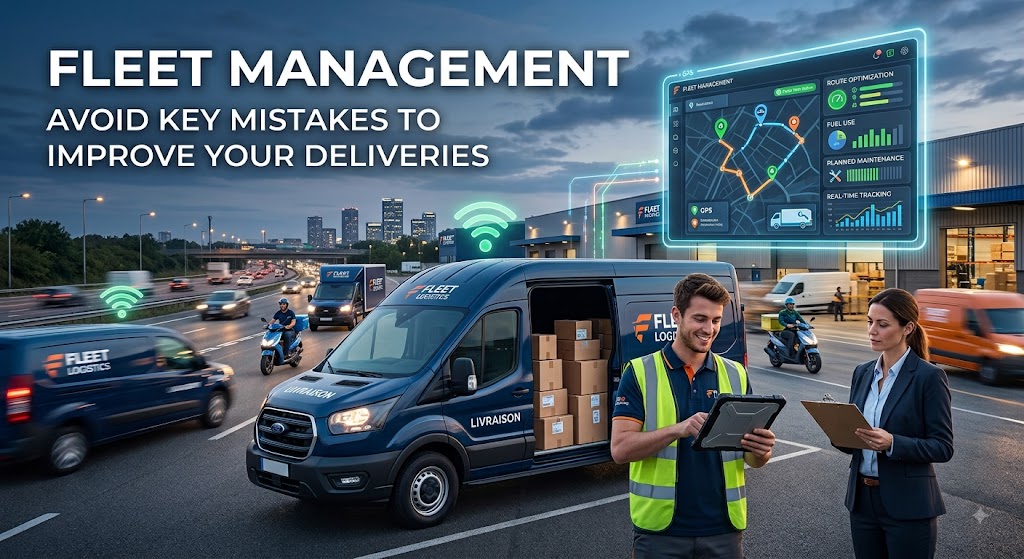
Fleet Management: Common Mistakes to Avoid for Better Deliveries
Discover the most common fleet management mistakes and learn how to reduce operating costs, optimize routes, improve driver performance, and make deliveries more efficient.
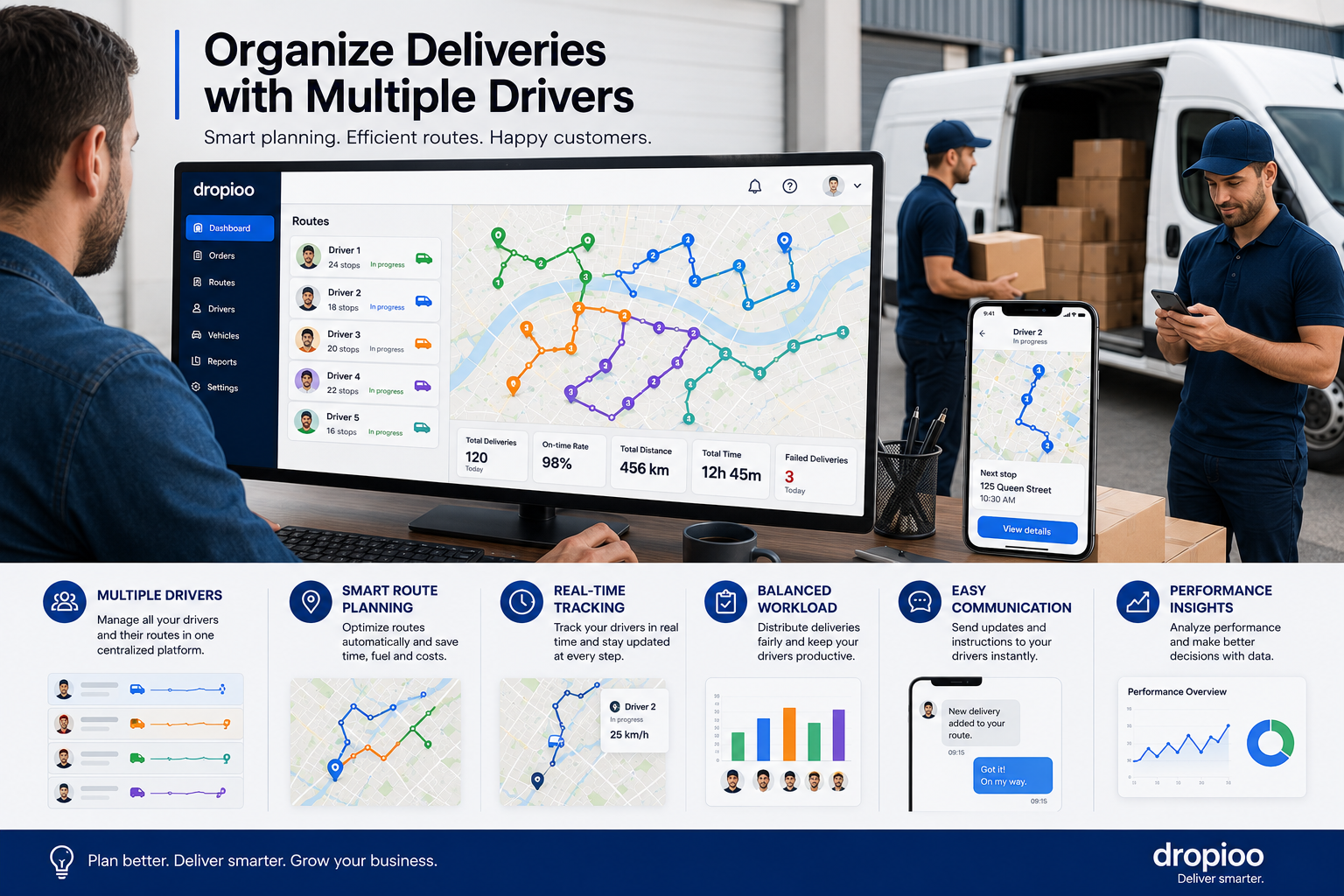
How to Organize Deliveries with Multiple Drivers
Managing multiple drivers can quickly become challenging as the number of deliveries increases. Learn how to efficiently assign orders, balance workloads, optimize routes, manage driver availability, and improve overall delivery performance.