
BlogOptimización
OptimizaciónBest Fleet Management Practices for Growing Businesses
Discover the best fleet management practices for growing businesses. Learn how route optimization, real-time tracking, preventive maintenance, and delivery automation help reduce costs, improve productivity, and scale logistics operations with Dropioo.
En esta página
Best Fleet Management Practices for Growing Businesses
As businesses grow, managing a fleet becomes increasingly complex. More vehicles, more drivers, and a higher volume of deliveries require a structured and efficient approach to fleet management. Without the right processes and technology, operational costs can quickly rise, delivery performance may decline, and customer satisfaction can suffer.
Effective fleet management is about more than tracking vehicles—it involves optimizing resources, improving driver productivity, reducing operational costs, and ensuring every delivery is completed on time.
In this article, we'll explore the best fleet management practices that help growing businesses scale efficiently and explain how Dropioo simplifies fleet operations through intelligent route planning and delivery management.
1. Optimize Routes Before Every Delivery
One of the most effective ways to improve fleet performance is to optimize routes before drivers leave the warehouse.
Manual route planning often results in:
Longer travel distances
Increased fuel consumption
Delivery delays
Unbalanced driver workloads
By using route optimization software, businesses can automatically calculate the fastest and most efficient routes based on distance, traffic, delivery priorities, and customer time windows.
2. Monitor Fleet Performance in Real Time
Real-time visibility allows fleet managers to make informed decisions throughout the day.
A modern fleet management platform should provide:
Live vehicle locations
Driver activity monitoring
Delivery status updates
Estimated arrival times (ETA)
Alerts for delays or route deviations
This visibility helps businesses respond quickly to unexpected events and maintain high service levels.
3. Balance Driver Workloads
Assigning too many deliveries to one driver while others have light schedules reduces overall efficiency.
Balanced workloads help:
Improve driver productivity
Reduce overtime costs
Prevent driver fatigue
Increase delivery capacity
Intelligent delivery assignment ensures that work is distributed fairly across the fleet.
4. Reduce Fuel Consumption
Fuel represents one of the highest operating costs for delivery businesses.
Companies can reduce fuel expenses by:
Optimizing delivery routes
Eliminating unnecessary mileage
Reducing idle time
Avoiding traffic congestion
Minimizing empty trips
Even small improvements in fuel efficiency can generate significant long-term savings.
5. Perform Preventive Vehicle Maintenance
Unexpected vehicle breakdowns can disrupt delivery schedules and increase operating costs.
Growing businesses should establish preventive maintenance schedules that include:
Tire inspections
Oil changes
Brake checks
Battery testing
Routine mechanical inspections
Well-maintained vehicles last longer, consume less fuel, and reduce costly downtime.
6. Use Data to Improve Fleet Performance
Fleet management generates valuable operational data.
Businesses should regularly monitor key performance indicators (KPIs), including:
Fuel consumption
Route efficiency
Delivery success rate
Driver productivity
Vehicle utilization
Average delivery time
Data-driven decisions help managers continuously optimize operations and identify opportunities for improvement.
7. Improve Communication with Drivers
Clear communication reduces mistakes and improves operational efficiency.
Drivers should receive:
Optimized delivery routes
Updated delivery schedules
Customer information
Delivery instructions
Real-time notifications
Providing accurate information allows drivers to complete deliveries more efficiently and deliver a better customer experience.
8. Invest in Scalable Fleet Management Technology
As delivery volumes increase, manual processes become more difficult to manage.
A scalable fleet management platform enables businesses to:
Add new drivers easily
Manage larger fleets
Handle more deliveries
Expand into new service areas
Maintain operational efficiency
Technology allows businesses to grow without increasing administrative complexity.
Why Businesses Choose Dropioo
Dropioo provides an all-in-one platform for intelligent fleet and delivery management.
With Dropioo, businesses can:
Automatically optimize delivery routes
Assign deliveries efficiently
Track vehicles and drivers in real time
Reduce fuel costs
Improve driver productivity
Monitor fleet performance through analytics
Scale operations with confidence
By combining route optimization, automation, and real-time visibility, Dropioo helps growing businesses maximize fleet efficiency while delivering exceptional customer service.
Conclusion
Fleet management plays a critical role in the success of any growing delivery business.
By adopting best practices such as route optimization, preventive maintenance, balanced driver workloads, real-time tracking, and data-driven decision-making, companies can reduce costs, improve efficiency, and prepare for long-term growth.
With Dropioo, businesses gain the tools they need to manage their fleet intelligently, optimize every delivery, and build a scalable logistics operation.
Manage Smarter. Deliver Faster. Grow with Dropioo.
¿Listo para optimizar tus rutas?
Empieza tu prueba gratuita hoy - 30 días gratis, sin tarjeta de crédito.
Prueba gratisSigue leyendo
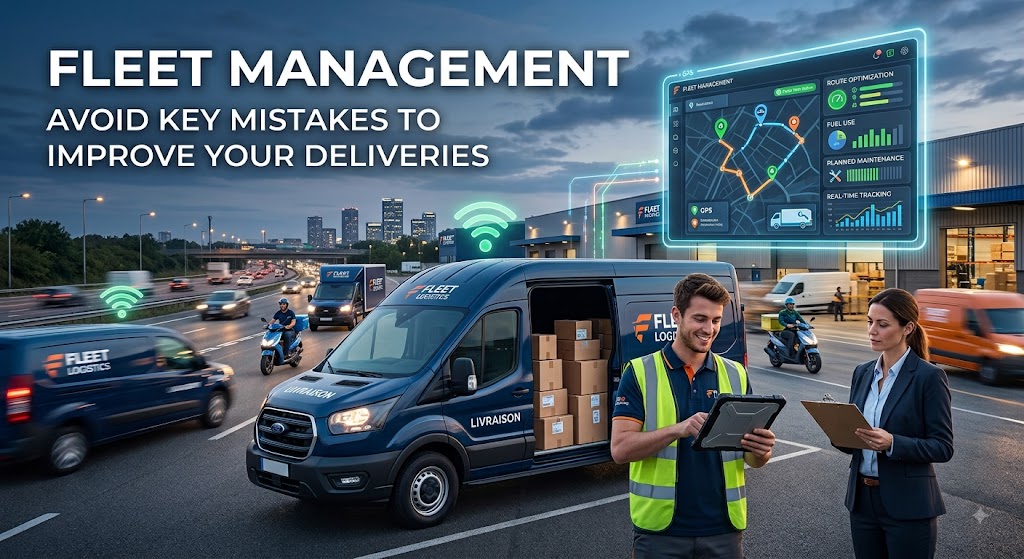
Fleet Management: Common Mistakes to Avoid for Better Deliveries
Discover the most common fleet management mistakes and learn how to reduce operating costs, optimize routes, improve driver performance, and make deliveries more efficient.
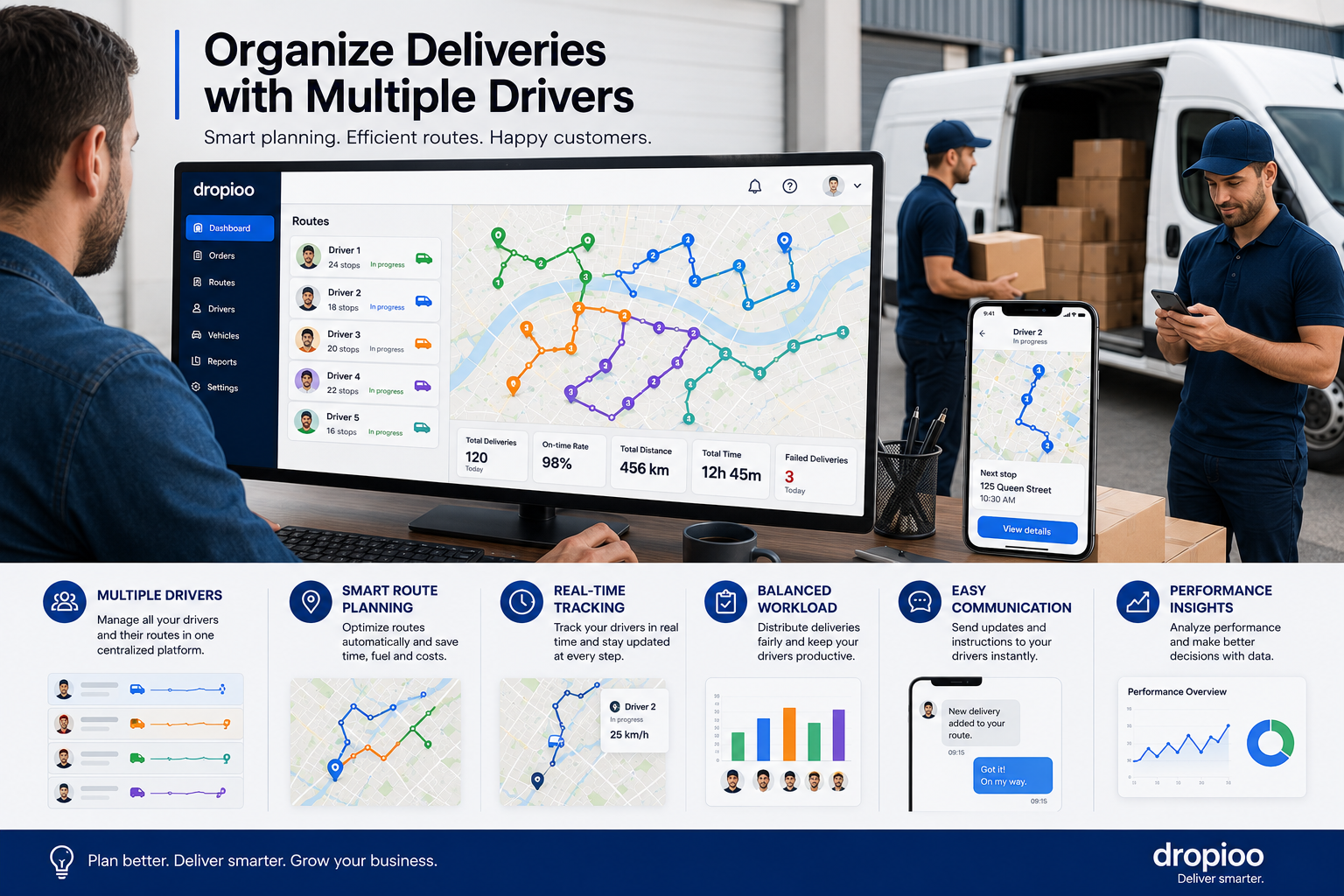
How to Organize Deliveries with Multiple Drivers
Managing multiple drivers can quickly become challenging as the number of deliveries increases. Learn how to efficiently assign orders, balance workloads, optimize routes, manage driver availability, and improve overall delivery performance.